
Robert Ferguson
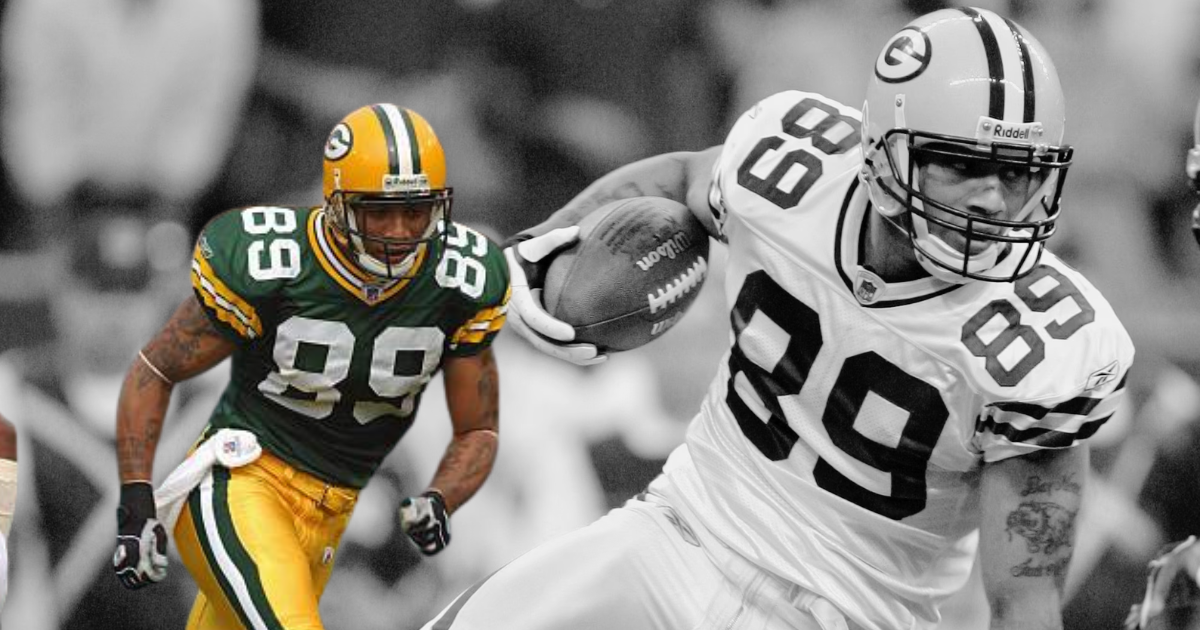
The Packers have a long and well-populated history of wide receivers. Don Hutson, arguably the first wide receiver, is at the top of the list, but he’s got plenty of company. James Lofton and Sterling Sharpe both have busts with Hutson in the Pro Football Hall of Fame, and Davante Adams is probably headed there someday, too.
Even outside the Hall of Fame, there are great wide receivers aplenty in Packers history. Jordy Nelson, Donald Driver, Antonio Freeman, Billy Howton, Boyd Dowler, and more all deserve their career accolades, and all were great in their own ways.
But while the Packers have a great history of wide receiver play, they don’t necessarily have a rich history of spending high draft picks on those wide receivers. That’s why whenever it happens, it seems like a big deal.
When the Packers selected Matthew Golden with their first pick in the 2025 NFL Draft, it was such a significant break with tradition that even team president Mark Murphy commented on it. The last time the Packers took a receiver that high was Javon Walker in 2002. But before Walker, it was second-round pick Robert Ferguson that was the combo breaker.
When Ron Wolf made Ferguson the 41st pick in the 2001 NFL Draft, it was the highest the Packers had drafted a wide receiver since 1988, when they selected Sterling Sharpe seventh overall.
A product of Texas A&M, Ferguson signed a four-year deal with a $1.3 million signing bonus — relatively big money at the time — and then promptly put up a goose egg for his entire rookie season. 0 catches, 0 yards, 0 touchdowns. The only people who contributed less to the Packers offense were running back Herbert Goodman and quarterback Doug Pederson, both of whom logged a single carry for -1 yards.
His only statistical contribution came on a punt return during the one game for which he was active in 2001. He brought it back all of four yards before he was tackled, and that, more or less, was that for Ferguson’s rookie year.
After the season, head coach Mike Sherman all but confirmed rumors as to why Ferguson hadn’t seen the field: he didn’t know the offense. “Quarterback Brett Favre and others suggested during training camp that Ferguson didn’t study his playbook enough,” wrote columnist Pete Dougherty in January 2002.
Ferguson came back that summer better equipped to contribute, and he did. He bounced back with a 22-catch, 293-yard, three-touchdown sophomore season, then built on that with a career best 38 catches for 520 yards and four touchdowns in 2003.
That was the high-water mark, but not the end of noteworthy moments in Ferguson’s career. The first of the two final big plays was an ignominious one. Running a seam route against the Jacksonville Jaguars late in the 2004 season, Ferguson hauled in a 31-yard pass from quarterback Brett Favre only to find himself on the receiving end of a brutal clothesline tackle from Jaguars safety Donovin Darius. Ferguson lost feeling in his extremities and would spend time in the hospital that night — though he should get endless credit for hanging onto the ball. For his part, Darius called Ferguson in the hospital to apologize.
The next season, Ferguson found himself on the receiving end of history. In the fourth quarter of a blowout loss to the Baltimore Ravens, Robert Ferguson caught the first pass in Aaron Rodgers’ career that actually gained yards. Rodgers had completed his first pass to fullback Vonta Leach earlier in the season, but Leach didn’t gain a yard. Ferguson did, collecting two yards to go down in history as the first player to generate positive receiving yards on a pass from Aaron Rodgers.
Ferguson hung on in Green Bay through the 2006 season, then spent two nondescript seasons with the Minnesota Vikings before his time in the NFL ended. He won’t go down as one of the great receivers in Packers history, but he made himself into a good one, and was there at the birth of one of the most important eras of Packers history.